About bwheelock

Education J.D., Washington University in St. Louis B.S.E. in Mechanical Engineering, Duke University

Concrete Allegations that Claim Elements are Not Well-Understood, Routine, or Conventional Prevents Dismissal under Rule 12(b)(6)

In Aatrix Software, Inc. v. Green Shades Software, Inc., [2017-1452] (June 1, 2018), the Federal Circuit denied rehearing and rehearing en banc of the panel decision.  Judge Moore, concurring, explained that Aatrix stands for the unremarkable proposition that whether a claim element or combination of elements would have been well-understood, routine, and conventional to a skilled artisan in the relevant field at a particular point in time is a question of fact.  As this is a factual question, the normal procedural standards for fact questions must apply, including the rules in the Federal Rules of Civil Procedure applicable to motions to dismiss or for summary judgment and the standards in the Federal Rules of Evidence for admissions and judicial notice.

Turning to the case at hand, Judge Moore noted that when patent eligibility is challenged in a motion to dismiss for failure to state a claim pursuant to Rule 12(b)(6),
the Court must apply the well-settled Rule 12(b)(6) standard which is consistently applied in every area of law: A motion to dismiss for failure to state a claim must be
denied if “in the light most favorable to the plaintiff and with every doubt resolved in the pleader’s favor—but disregarding mere conclusory statements—the complaint states any legally cognizable claim for relief.”  Judge Moore noted that the second amended
complaint in Aatrix included “concrete allegations . . . that individual elements and the claimed combination are not well-understood, routine, or conventional activity” and that nothing in the limited record at the Rule 12(b)(6) stage refuted these allegations, so there was no legal basis to affirm the dismissal of the complaint.


Posted in 101

Anticipation Analysis Indisputably Allows for Some Flexibility; Substantial Evidence Still Supports Finding of No Anticipation

In Microsoft Corp v. Biscotti, Inc., [2016-2080, 2016-2082, 2016-2083] (December 28, 2017), the Federal Circuit affirmed the Board’s determination in the IPR’s that Microsoft failed to show by a  preponderance of the evidence that the challenged claims of U.S. Patent No. 8,144,182 were anticipated or obvious.

The challenged patent related to “tools and techniques for providing video calling solutions” and relates to real-time video conferencing where two or more users communicate, over a network, in a conference that includes video and audio of each participant.

Microsoft appeared to challenge the standard of review of anticipation, so the Federal Circuit began by reiterating that anticipation is a question of fact subject to substantial evidence review.  Noting that the Board correctly articulated the anticipation standard, the Federal Cricuit considered whether the Board properly applied that standard. ,   anticipate the claimed invention, a prior art reference must disclose all elements of the claim within the four corners of the document, and it
must disclose those elements arranged as in the claim, the Federal Circuit.  Noting that the Board may have used wording such as  “identically” more liberally than it should have because an anticipation analysis indisputably allows for some flexibility, the Federal Circuit found that the Board’s analysis did not suffer from a misapplication of the anticipation standard.  The Federal Circuit found that the Board therefore did not require word-for-word similarity or perfection, and explicitly considered whether a POSA would “at once envisage” the combination of the claimed invention given the disconnected teachings of the reference.

However even though the Board articulated the correct standard, and applied the correct standard, this did not mean that the Board’s analysis was correct.  Microsoft argued that the Board read the prior art too narrowly, limiting certain disclosures to particular embodiments, and not applying them to all disclosed embodiments.  The Federal Circuit said although Microsoft’s arguments were not unreasonable, it does not review this question de novo; anticipation is a question of fact, reviewed for substantial evidence.  In light of this deference, the Federal Circuit affirmed the Board’s decision.

The Federal Circuit found that Microsoft’s brief on appeal with respect to one claim was more detailed and contained substantial new arguments regarding anticipation, and rejected them because they were not presented in the Petition.


ACINIFORM – The Right Word for the Right Shape

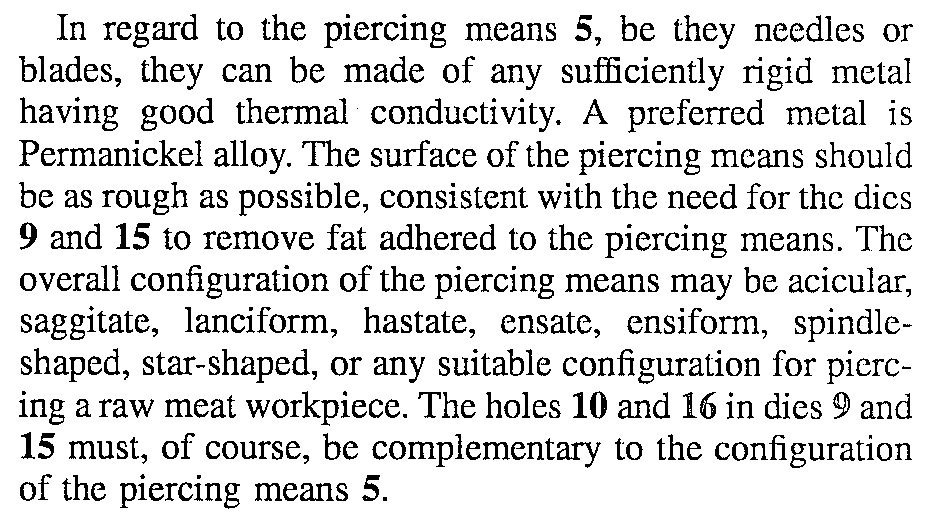
It’s always rewarding to stumble across the perfect word to describe or claim an invention, and today’s word from a word a day has that potential: aciniform, which means shaped like a cluster of grapes.  This word has been used in 48 patents, and has been used in the claims of four patents.

In claiming a separator for a lithium ion battery, U.S. Patent No. 8,192,873 claimed the ceramic particles forming the separator has having an aciniform shape:

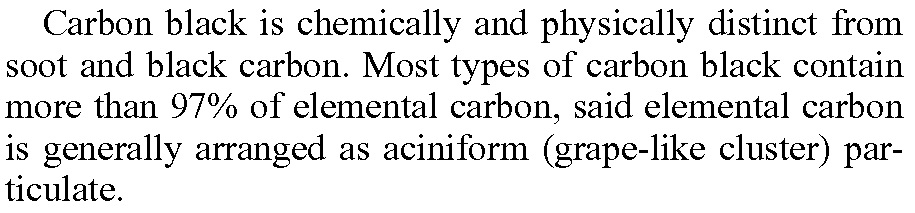
In describing carbon black, U.S. Patent 9,580,606 (Col. 5, lines 19-23) explained it was an aciniform, prudently adding a parenthetical definition given the vagaries of construing patents:

If You Try to Hide Prosecution Conduct, Then the Court will Presume You Had Something to Hide

In Regeneron Pharmaceuticals v, Merus N.V., [16-1346] the Federal Circuit denied rehearing and rehearing en banc of the July panel decision previously discussed here, that litigation misconduct warranted a finding of inequitable conduct in patent prosecution.

Judge Newman, who is usually spot-on in her analysis, again dissented, voicing her concern that inequitable conduct in patent prosecution can be retrospectively imposed by “adverse inference” arising from later misconduct in litigation, without a showing of deceptive intent, which she called “a disservice to the patent practitioner, the patentee, and the public.”


While it would be disturbing if the subsequent unrelated conduct of a litigator could retroactively change the nature of the conduct of the patent prosecutors, this is not the case in Regeneron.  The litigation conduct complained of related to resisting disclosures about the alleged inequitable conduct.  If a party is not forthcoming about accused conduct, it seems reasonable to assume that there was something wrong with that conduct.

If Regeneron is used to transmute litigation misconduct into prosecution misconduct, then Judge Newman is right this is a disservice to patentee and their prosecutors.  However, if Regeneron simply means that if you try to hide prosecution conduct, then the courts will presume you had something to hide, the rule should not be a threat to patent owners and their counsel.

Aqua Holds Water; Board’s Denial of Motion to Amend Vacated Because Board Improperly Put Burden on Patent Owner

In Bosch Automotive Service Solutions, LLC v. Matal, [2015-1928] (December 22, 2017), the Federal Circuit affirmed the Board’s finding of unpatentability of claims 1, 4–15, and 20–22, of U.S. Patent No. 6,904,796, on a remote tire monitoring system, but vacated and remanded the denial of Bosch’s motion to amend as to proposed substitute claims 23–38.

On appeal Bosch primary argued lack of motivation to combine, but the Federal Circuit was bit persuaded, noting that the prior art must be considered for everything it teaches by way of technology and is not limited to the particular invention it is describing and attempting to protect.”  Bosch also argued commercial success, but the Federal Circuit found that Bosch failed to prove commercial success with a nexus to the claims.  In particular the Federal Circuit agreed that a declarant’s “understanding” that the products are covered by the patent was an insufficient foundation.

As to Bosch’s Motion to Amend, the Board rejected Boesch’s proposed amended claims 23–35 as indefinite under 35 U.S.C. § 112, ¶ 2, and Bosch’s proposed amended claims 36–38 as unpatentable over the
prior art.   Among other arguments, Bosch challenged the Board’s rejection of both sets of proposed amended claims on the grounds that the Board impermissibly placed the burden on Bosch to establish patentability.

As to claims 23-35, the Federal Circuit found that the Board impermissibly assigned the burden of proof to Bosch, and vacated the Board’s denial of Bosch’s motion to amend with respect to proposed claims 23–35 and remand for the Board to evaluate the patentability of the proposed amended claims consistent with Aqua Products.  Similarly with respect to claims 36-38, the Federal Circuit found the Board improperly placed the burden of proving patentability over the prior art on Bosch, and vacated and remanded the motion to amend these claims as well.


Dear Santa . . .

Dear Santa:

I’ve been a good patent lawyer this year, and always comply with Rule 56.  For all of the inventors we represent, I was hoping that this Christmas you would bring:

  1. A new 35 USC §101.  The Supreme Court broke the one we had.  We need a law that protects all inventions, and doesn’t exclude a whole class of inventions merely because they can be reduced to a simple-sounding concept.  A method that includes at least one non-mental step is not abstract.  It may not be novel, it may not be non-obvious, but it is not abstract.  Likewise, a product or machine is never abstract.
  2. A new  35 USC §102.  Although  the one we have is just a few years old, it never worked right.  The most fundamental concept of any patent system is prior art, yet we don’t have clarity about what is or what is not prior art.  Does a sale or use have to be disclosing or is the fact that the sale or use is known enough?  Does “secret” prior art apply to obviousness?  These are things we need to know.
  3. A new 35 USC §311 that is more fair to patent owners.  Inter Partes Review may be here to stay, but the process can be unfair to patent owners.  There is no standing requirement — a petition can be filed even if the patent owner has not asserted or even threatened to assert the patent.  A patent owner can be subjected to multiple proceeding, sometimes simultaneously, and even if the patent owner wins there is essentially no estoppel against relitigating validity in the courts.  Even after litigation is started, an accused infringer can use Inter Partes Review to change the claim construction (BRI) and the burden of proof (preponderance).  What happened to the presumption of validity.  You and your elves have a lot of work to fix this.
  4. If it fits in your bag, how about a presumption in favor of an injunction? The Constitution promised exclusive rights, but the Supreme Court seems to think otherwise.  How about limiting claims to what is disclosed and enabled in their accompanying specification, instead of invalidating claims to important inventions under §112?

Thanks, Santa, and Merry Christmas!

Whether Third Party Acts are Attributable to Infringer in a Divided Infringement Situation is Question of Fact

Travel Sentry, Inc. v. Tropp, [2016-2386, 2016-2387, 2016-2714, 2017-1025] (December 19, 2017), the Federal Circuit vacated summary judgment of non-infringement, finding genuine disputes of material fact regarding whether Travel Sentry directs or controls the performance of certain steps of the claimed methods.

The case involved U.S. Patent Nos. 7,021,537 and 7,036,728 directed to
methods of improving airline luggage inspection through the use of dual-access locks.  The infringement claim hinged on a Memorandum of Understanding (MOU) between Travel Sentry in the TSA.  The district court found that this did not evidence sufficient control by Travel Sentry to constitute infringement.

The Federal Circuit noted that in Akamai V, it affirmed the principle that “[d]irect infringement under § 271(a) occurs where all steps of a claimed method are performed by or attributable to a single entity,” and held that an entity is responsible for others’ performance of method steps where
that entity directs or controls others’ performance or where the actors form a joint enterprise.  The Federal Circuit further noted that liability under § 271(a) could be found when an alleged infringer ‘conditions participation in an activity or receipt of a benefit upon performance of a step or steps of a
patented method and establishes the manner or timing of that performance.

The Federal Circuit said that the district court reasoned that summary judgment was appropriately awarded to Travel Sentry and its licensees
because there was simply no evidence that Travel Sentry had any influence whatsoever on the third and fourth steps of the method carried out by the TSA, let alone that it masterminded the entire patented process.  In so doing the district court incorrectly found that Akamai V did not expand the scope of direct infringement under § 271(a), and did “not disturb the BMC Res./Muniauction test.”

The Federal Circuit reiterated that under Akamai V, “liability under § 271(a) can also be found when an alleged infringer conditions participation in an activity or receipt of a benefit upon performance of a step or steps of a patented method and establishes the manner or timing of that  performance,”  and reiterated that whether a single actor directed or controlled the acts of one or more third parties is a question of fact.

The Federal Circuit pointed to its recent application of § 271(a)  in Eli Lilly v. Teva Parenteral Medicines.  Based upon the reasoning in Akamai V and Eli Lilly, the Federal Circuit said that a reasonable jury could conclude that TSA’s performance of the final two claim steps is attributable to Travel
Sentry such that Travel Sentry is liable for direct infringement under § 271(a).  The Federal Circuit found that the district erred in three respects:

First, it misidentified the relevant “activity” at issue, broadly defining it as “the luggage screening mandated by Congress,” rather than more specifically as “screening luggage that TSA knows can be opened
with the passkeys provided by Travel Sentry.”  Second, the district court misapprehended what types of “benefits” can satisfy Akamai V’s first prong, noting that the jury could find that the ability to open identifiable luggage using a master key, which would obviate the need to break open the lock, was a sufficient benefit.  Third, the court mischaracterized what is required for one to “condition” a third party’s participation in an activity or receipt of a benefit on the third party’s performance of one or more claim steps.

Under the second Akamai prong, the Federal Circuit also found that, drawing all justifiable inferences in Tropp’s favor, a reasonable jury could find that Travel Sentry has established the manner or timing of TSA’s performance.

Federal Circuit Affirms Board on Claim Construction, No Anticipation, and Nonobviousness

In HTC Corp. v. Cellular Communications Equipment, LLC [2016-1880] (December 18, 2017), the Federal Circuit affirmed the PTAB’s Final Written Decision, finding no error in the Board’s claim construction, and that substantial evidence supported the Board’s determination that the challenged claims were not invalid.

The IPR involved U.S. Patent No. 7,941,174, which is directed to
methods and apparatuses for a radio communications system where a subscriber station, i.e., a mobile device, is assigned a plurality of codes for transmitting messages.

The Board did not expressly construe the term “message,” nor did HTC did not seek construction of the term.  However, the Federal Circuit found that Board findings establishing the scope of the patented subject matter may fall within the ambit of claim construction, reviewable on appeal.  However the Federal Circuit found HTC’s arguments unpersuasive and inconsistent.

On the asserted anticipation grounds, the Federal Circuit found that substantial evidence supported the Board’s conclusion, and rejected arguments presented by HTC for the first time on appeal.  On the asserted obviousness grounds, the Federal Circuit agreed with the Board’s reading of the prior art, and found that HTC did not point to any evidence in the record that would undermine the Board’s findings on the scope and content of the prior art.


No Need to be your Own Lexicographer

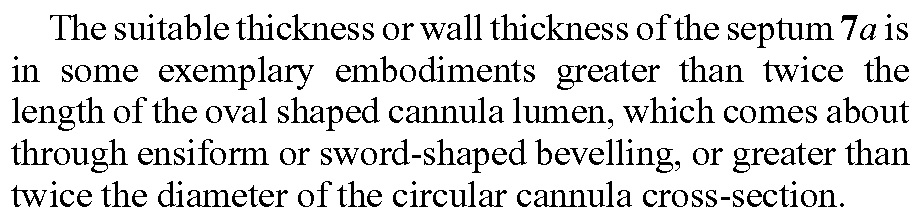
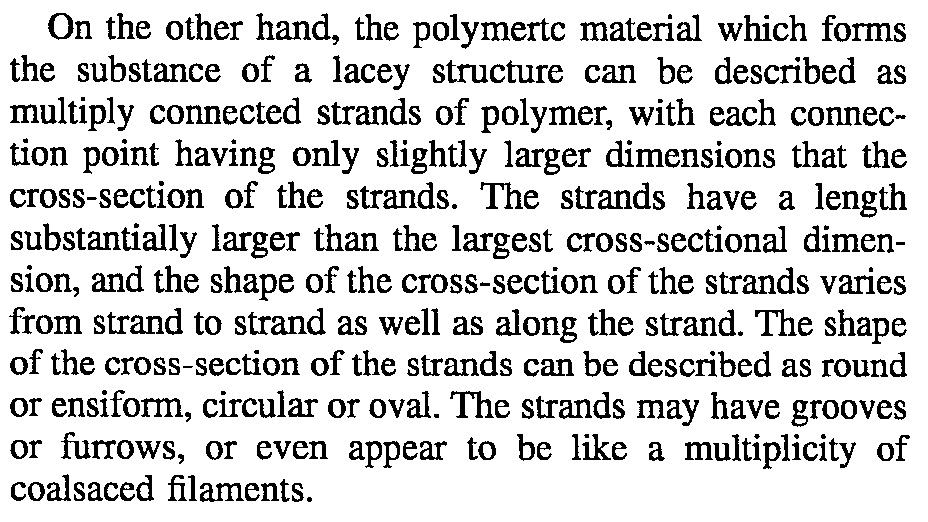
The word of the day for December 14 from  Wordsmith.org is ensiform, meaning sword-shaped, which is a potentially useful work for patent prosecutors, and in fact has been useful to at least a few:

U.S. Patent No. 9,061,129:Col. 15: 21-25.  U.S. Patent No. 5,489,406:

Col. 3, lns. 36-47.  Lastly, U.S. Patent No. 5,460,842:

Col. 8, lns. 7-18 is a virtual thesaurus for words describing stabby things.  The English language is so rich in descriptive words that patent drafters don’t always have to make up their own.