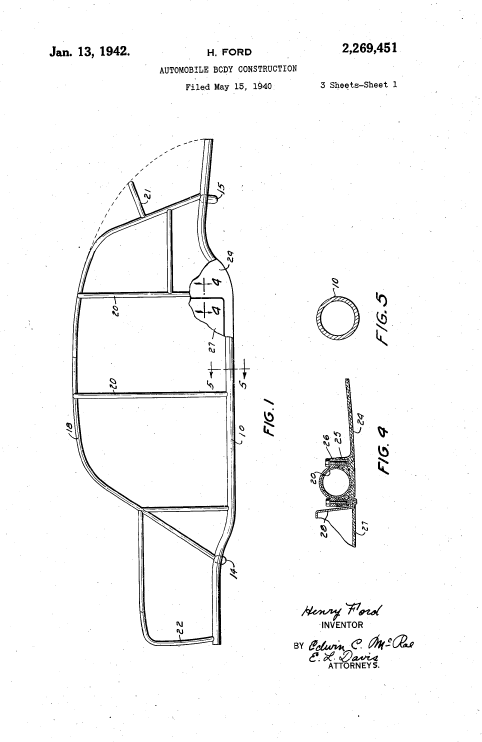
On January 13, 1942, Henry Ford received U.S. Patent No. 2,269,451 on an Automobile Body Construction:
The body comprised a steel tube frame supporting plastic panels. Henry Ford began work on the plast car in the 1930s, resulting in a 2,000-pound vehicle (an average of 1000 pounds lighter than a conventional car) with a tubular steel framework surrounded by 14 plastic panels that were made from soybean and hemp. The “Soybean Car,” was first displayed at a community festival in Dearborn, MI, in August 1941. Ford eschewed petroleum-based plastics, hoping to integrate agriculture and industry with plant-based plastics.
Ahead of its time, Ford’s problem was timing — with the world ramping up for World War II, production of the car was deferred and never started.
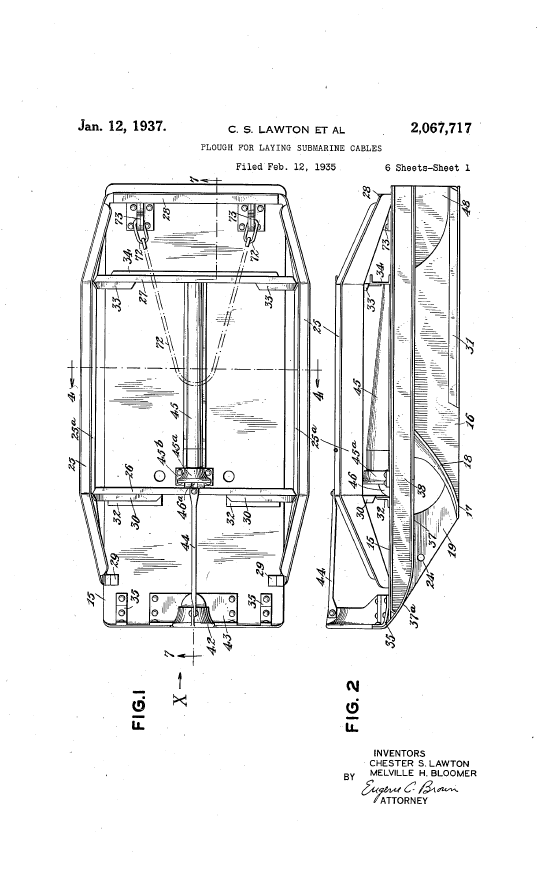
On January 12, 1937, U.S. Patent No. 2,067,717 issued on a Plough for Laying Submarine Cables:
This was the first U.S. patent for a submarine cable plow. The plow was designed to simultaneously dig a trench into the ocean floor and feed a cable into the trench. It could be used at depths of up to a half mile.
Efforts began in 1854 to build the first transatlantic cable from Valentia Island off the west coast of Ireland to Newfoundland. The first communications occurred on August 16, 1858, although the line speed was poor. Queen Victoria famously sent the first official telegram to President Buchanan. Signal quality declined rapidly, and the cable was destroyed after just three weeks when excessive voltage was applied in an attempt to achieve faster operation.
The transatlantic ccable was laid in 1865 with improved material, but more than halfway across, the cable broke, and it was abandoned after several failed rescue attempts. In July 1866 a third cable was laid, and put in service on July 27. The 1865 cable was also recovered and spliced, so two cables were in service. There has been a permanent cable connection between the continents ever since.
Thanks to Lawton’s and Bloomer’s work the first transatlantic cable of high-speed permalloy in June 1938. Lawton also patented a Method of and Apparatus for Laying Submarine Cables on November 16, 1937 (U.S. Patent No. 2,099,526), a Releasing Gear on September 27, 1938 (U.S. Patent No. 2,131,445), a Method and apparatus for determining Topography of Ocean Bed on March 26, 1940 (U.S. Patent No. 2,194,947), a System and Apparatus for Determining at a Distance the Angular Position of a Submarine Device on August 29, 1939 (U.S. Patent No. 2,171,156), and a Submarine Apparatus on July 8, 1941 (U.S. Patent No. 2,248,243).
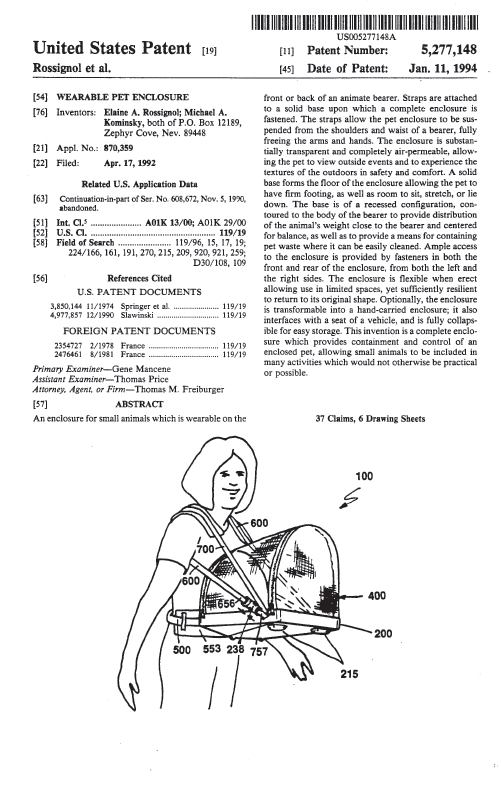
On January 11, 1994, U.S. Patent No. 5,277,148 issued on a Wearable Patent Enclosure:
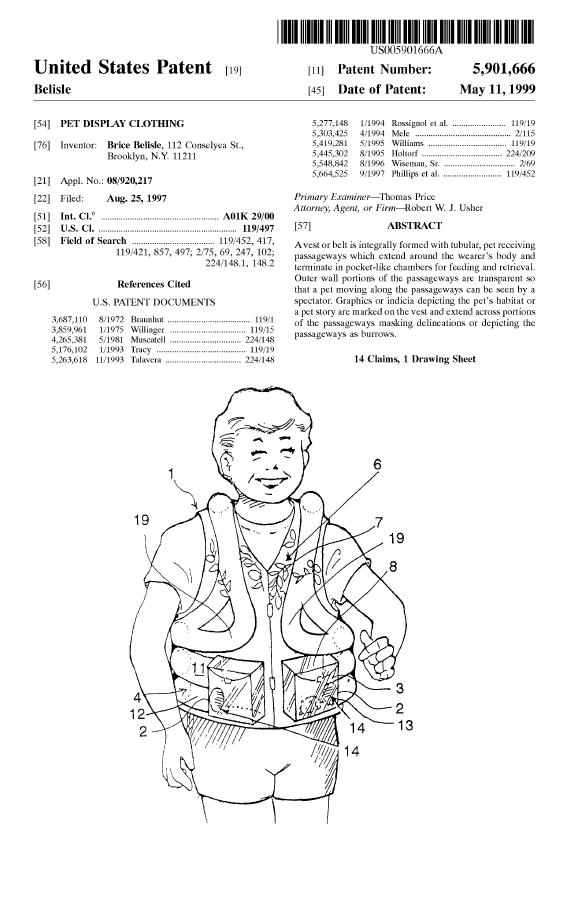
A few years later, pet-carrying technology advanced to incorporate the pet carrier into clothing. U.S. Patent No. 5,901,666 on Pet Display Clothing issued May 11, 1999:
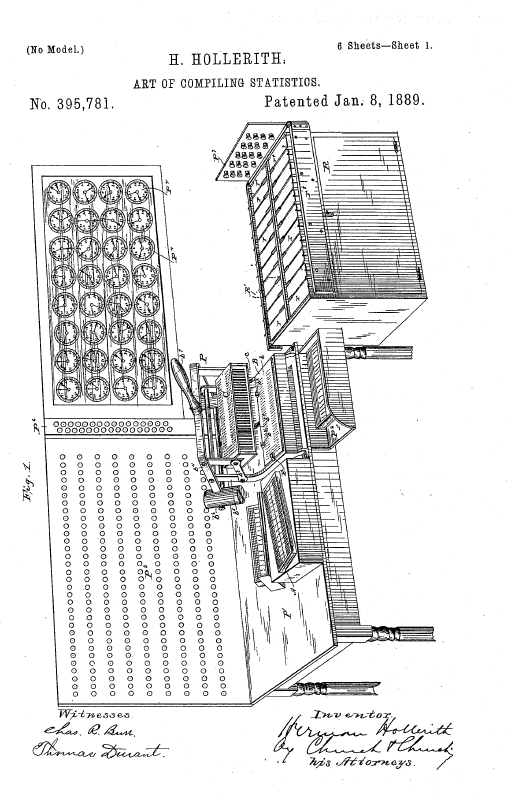
On January 8, 1889, U.S. Patent No. 395,781 issued to Herman Hollerith on the Art of Compiling Statistics:
Herman Hollerith was a German-American statistician, inventor, and businessman who developed an electromechanical tabulating machine for punched cards to assist in summarizing information and, later, in accounting. Hollerith founded a company that was combined with several other companies to form the Computing-Tabulating-Recording Company. In 1924, the company was renamed “International Business Machines.”
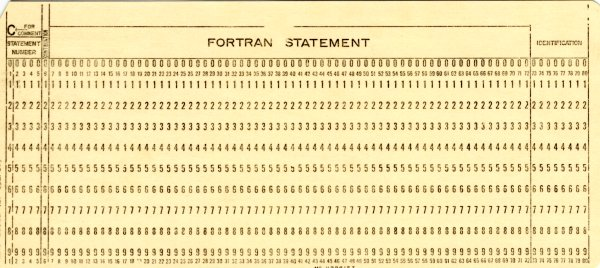
At one time Hollerith cards were ubiquitous in computing centers. Computer technology has moved on, but that does not diminish the importance of Hollerith’s role in computer technology.
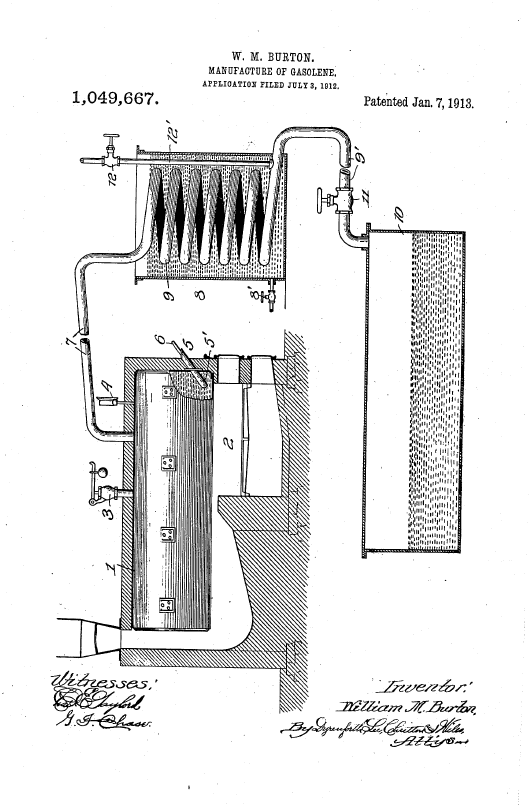
On January 7, 1913, W. M. Burton received U.S. Patent No. 1,049,667 on the Manufacture of Gasoline:
Burton’s process used heat to “crack” oil into gasoline, making the recovery of gasoline more efficient (more the doubling the amount of gasoline that can be recovered), and saving a tremendous amount of crude oil. Although largely replaced by catalytic processes Burton’s process is still in use today.
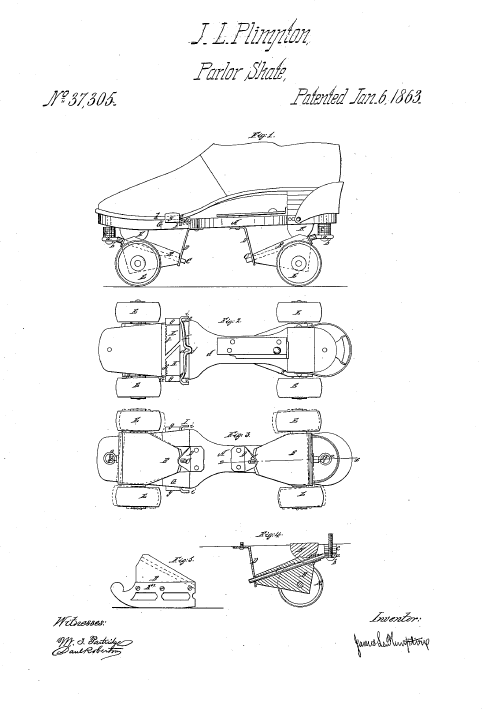
On January 6, 1863, James Plimpton received U.S. Patent No. 37305 on a Parlor Skate:
While the first patented roller skate was introduced in 1760 by Belgian inventor John Joseph Merlin, lacking the ability to steer or stop, they never gained popularity. 100 years later, James Plimpton’s skate used a four-wheel configuration for stability and were easier to use. driving huge popularity of roller skating in the 1860s and 1870s that spread to Europe and around the world.
Plimpton also opened some of the earliest roller skating rinks in New York City and Newport, Rhode Island, and established the first formal roller skating club. He continued to invent improvements in roller skates, including Improved Skate in 1866 (U.S. Patent No. 55901), and a Roller-Skate in 1908 45 years after his first roller skate patent (U.S. Patent No. 906281).
Plimpton’s son, Henry Richardson Plimpton, 2nd, carried on the family interest in roller skating, receiving U.S. Patent No. 876,836 on an Antifriction-Bearing on January 14, 1908.
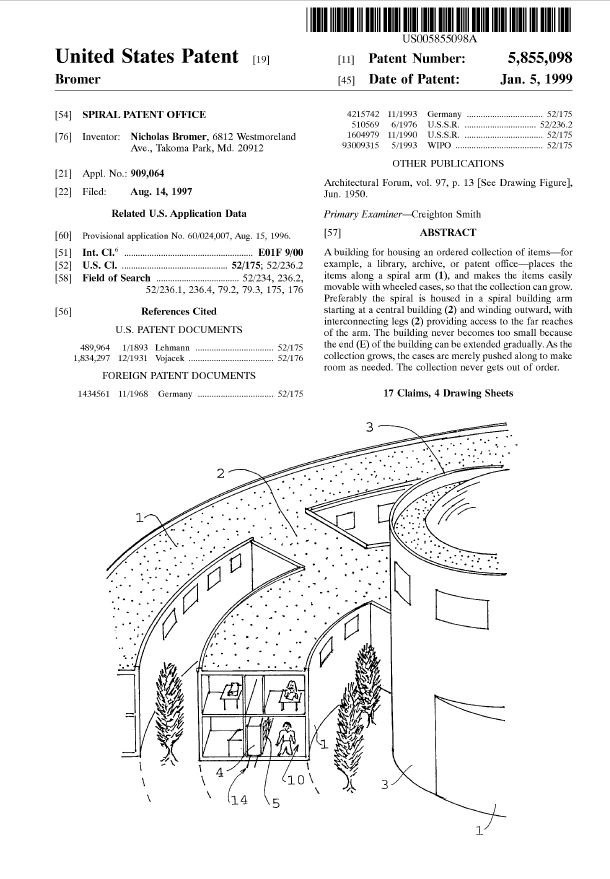
On January 5, 1999, Nicholas Bromer received U.S. Patent No. 5,855,098 on a Spiral Patent Office:
The invention was not limited to buildings for a patent office, and applies to any organization that houses archives or ordered collections, the “best example” being the U.S. Patent and Trademark Office.
The patent notes that “[f]or years, the talk has been that computers will do away with the paper patent collection. However, like “artificial intelligence”, this has not happened despite the computer enthusiasts’ optimism. The patent office will probably depend on its paper collections well into the next century.” This prediction from 1996 turned out to be wrong, so it looks like we may never see a spiral patent office.
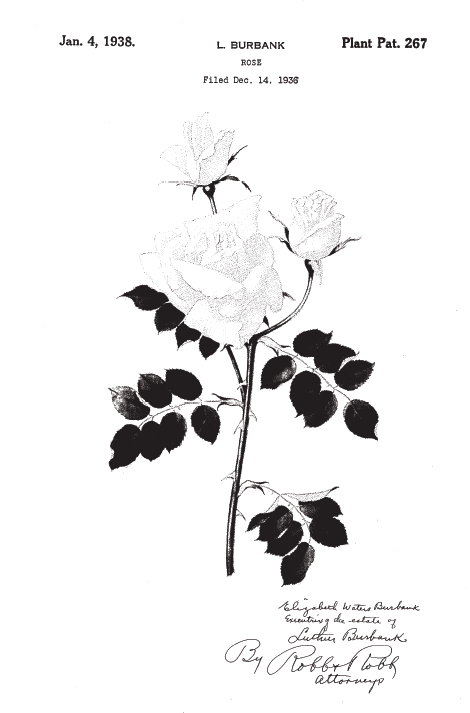
On January 4, 1938, Luther Burbank received U.S. Patent No. 267 on a Rose:
Burbank’s work helped to prompt the passage of the 1930 Plant Patent Act four years after his death. The Act made it possible to patent new varieties of plants. In his testimony before Congress in support of the Act, Thomas Edison testified “This [bill] will, I feel sure, give us many Burbanks.” Plant Patents No. 12, 13, 14, 15, 16, 18, 41, 65, 66, 235, 266, 267, 269, 290, 291, and 1041 all issued to Burband posthumously.
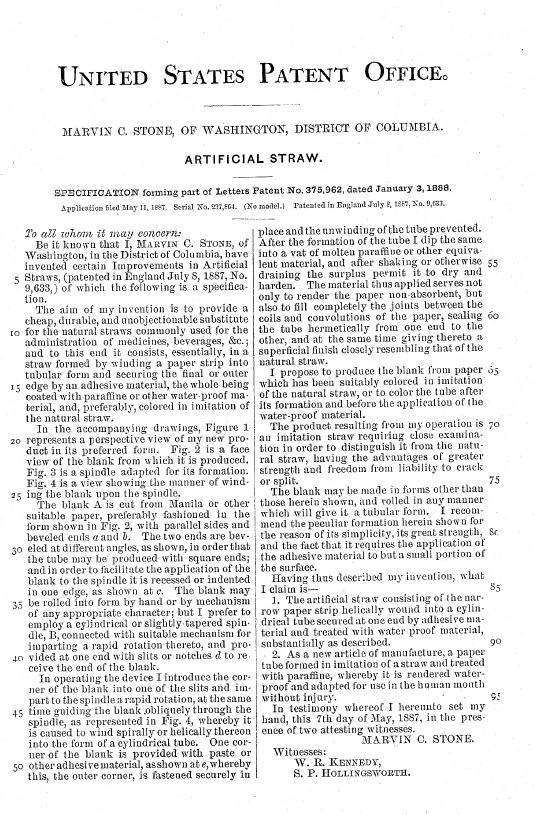
On January 3, 1888, U.S. Patent No. 375962 issued to Marvin C. Stone on an Artificial Straw:
This straw was said (by Marvin) to be an improvement over the artificial straw patented (No. 9633) in England on July 8, 1887. Marvin explained:
Marvin’s straw was a paper strip formed by wrapping it around a spindle and dippling it in paraffin to make it water-proof. A few years later, Marvin got a patent (U.S. Patent No. 5277736 issued October 16,1994) on a Method of Coating Paper Tubes, and two patents (U.S. Patent Nos. 585057 and 585058, issued June 22, 1897), on alternate configurations of artificial straws.
Ironically, artificial straws were created to replace natural straws, such as rye grass straws, and now we are looking for more natural alternatives to the artificial straws.
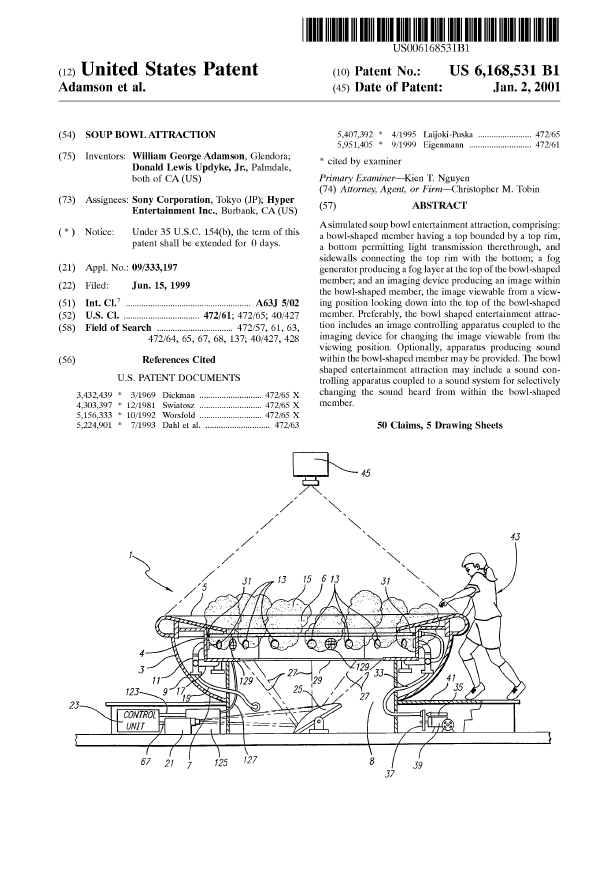
On January 2, 2001, U.S. Patent No. 6,168,531 issued to William Adamson and Donald Updyke, Jr. on a “Soup Bowl Attraction”:
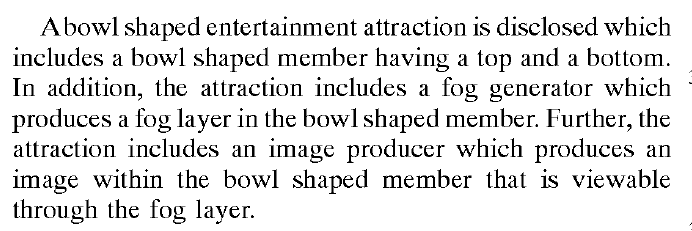
As explained by the patent, the invention is a giant bowl with fog generators to make it appear like a steaming bowl of soup:
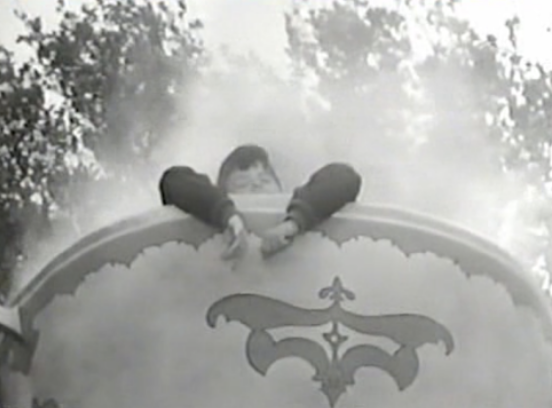
The Examiner was apparently not familiar with classic 1960’s television, because this “attraction” is strikingly similar to the soup bowl in which Beaver Cleaver got stuck in “In the Soup” (Season 4, Episode 32, of Leave it to Beaver (1961)):
The ‘531 patent was assigned to Sony Corporation and Hyper Entertainment Inc. One wonders what Sony had in mind for this technology.