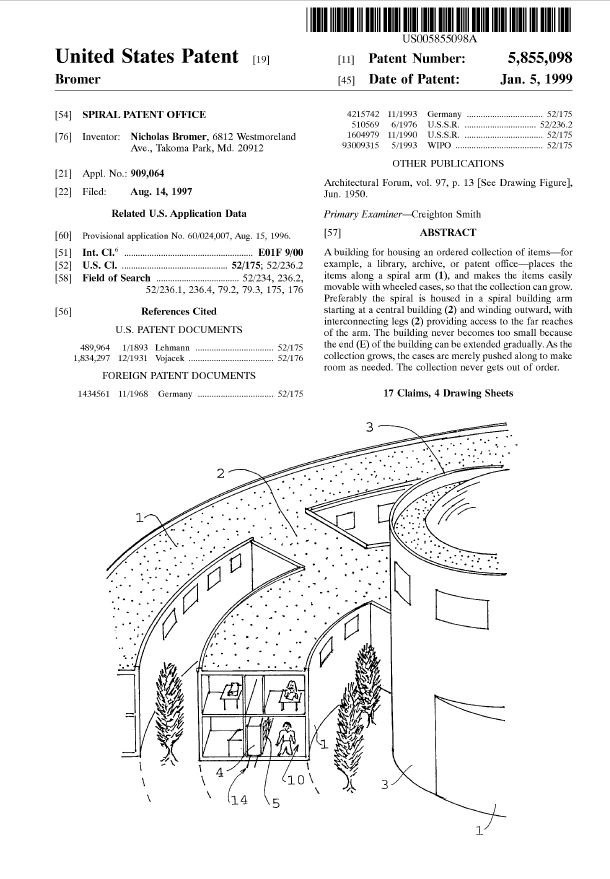
On January 5, 1999, Nicholas Bromer received U.S. Patent No. 5,855,098 on a Spiral Patent Office:
The invention was not limited to buildings for a patent office, and applies to any organization that houses archives or ordered collections, the “best example” being the U.S. Patent and Trademark Office.
The patent notes that “[f]or years, the talk has been that computers will do away with the paper patent collection. However, like “artificial intelligence”, this has not happened despite the computer enthusiasts’ optimism. The patent office will probably depend on its paper collections well into the next century.” This prediction from 1996 turned out to be wrong, so it looks like we may never see a spiral patent office.
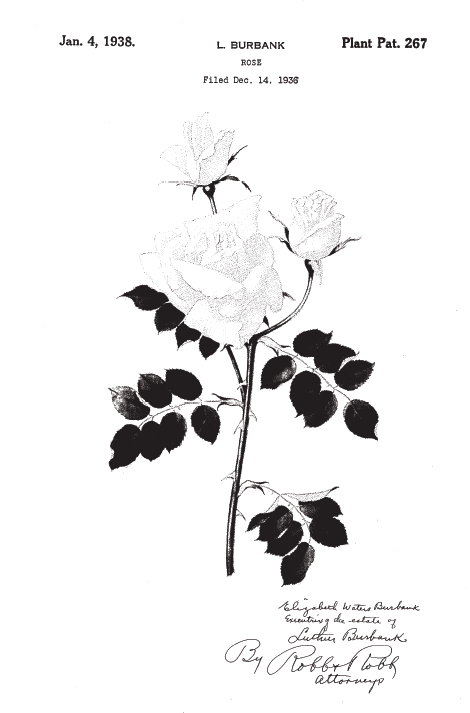
On January 4, 1938, Luther Burbank received U.S. Patent No. 267 on a Rose:
Burbank’s work helped to prompt the passage of the 1930 Plant Patent Act four years after his death. The Act made it possible to patent new varieties of plants. In his testimony before Congress in support of the Act, Thomas Edison testified “This [bill] will, I feel sure, give us many Burbanks.” Plant Patents No. 12, 13, 14, 15, 16, 18, 41, 65, 66, 235, 266, 267, 269, 290, 291, and 1041 all issued to Burband posthumously.
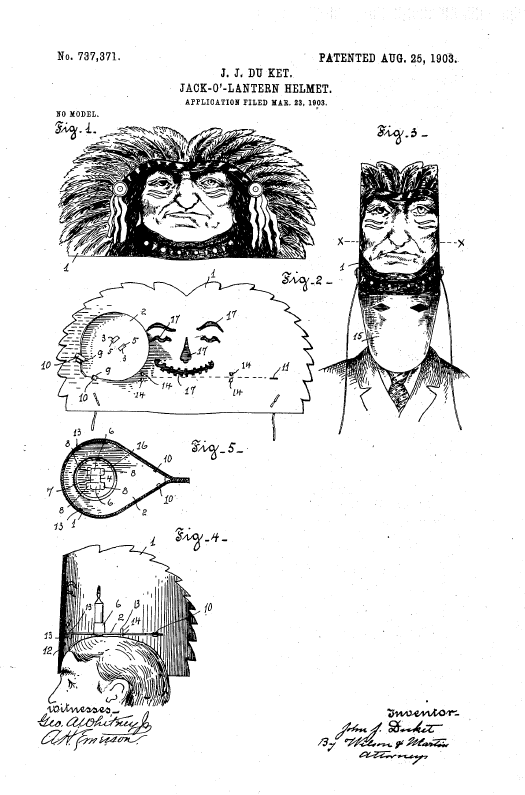
Halloween has spooky overtones, even in the USPTO. Take for instance U.S. Patent No. 727371 from 1903 on a Jack-O-Lantern Helmet:
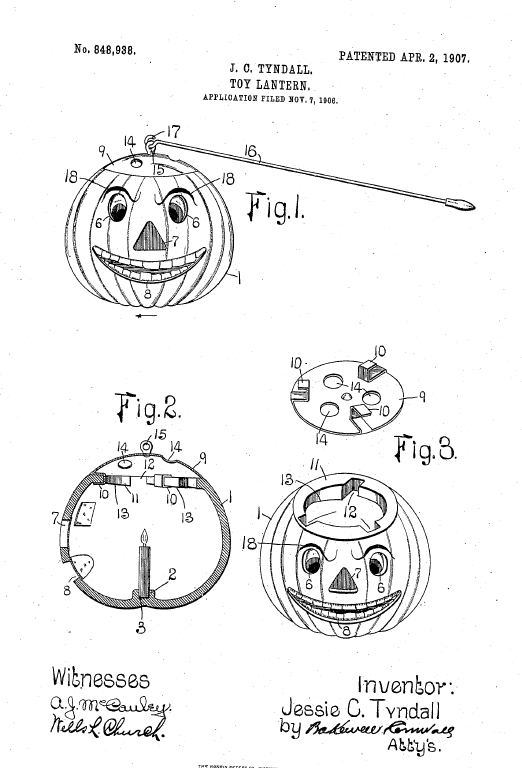
Political correctness aside, who is going out with a candle on their head? U.S. Patent No. 838938 from 1907 on a Toy Lantern, also has trick-or-treaters carrying around a lit candle:
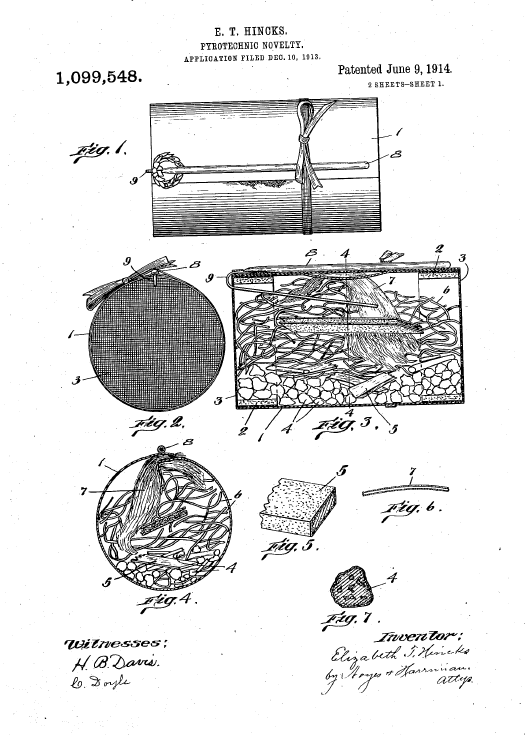
Hopefully, the Pyrotechnic Novelty of U.S. Patent No. 1,099,548, from 1914 is safer than it sounds:
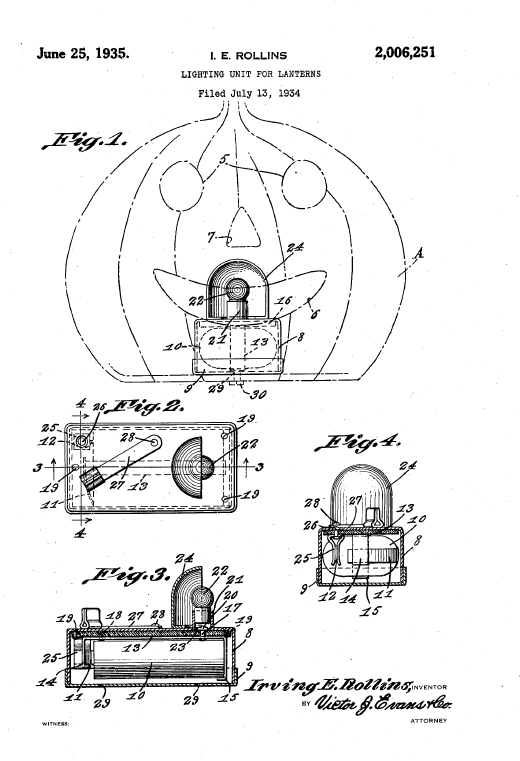
Finally, in 1935 Irving Rollins brought some safety to Halloween with a Halloween lantern with a battery operated lamp (U.S. Patent No. 2,006,251):
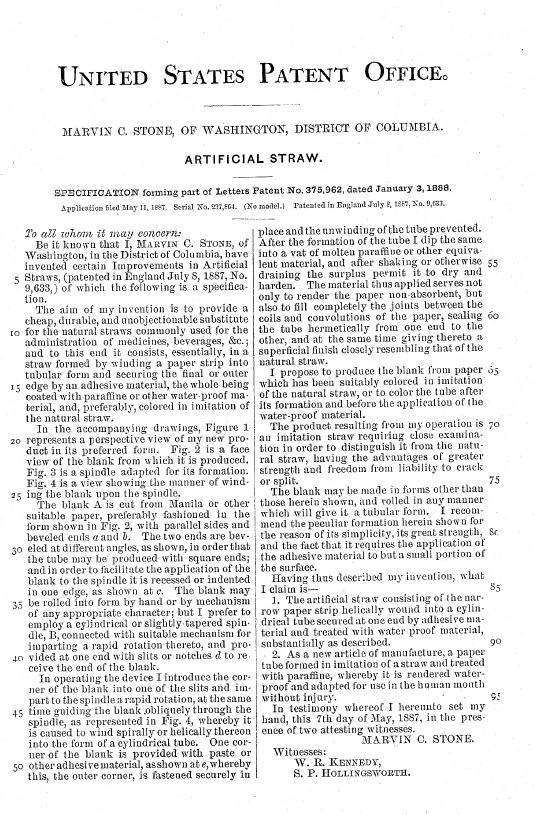
On January 3, 1888, U.S. Patent No. 375962 issued to Marvin C. Stone on an Artificial Straw:
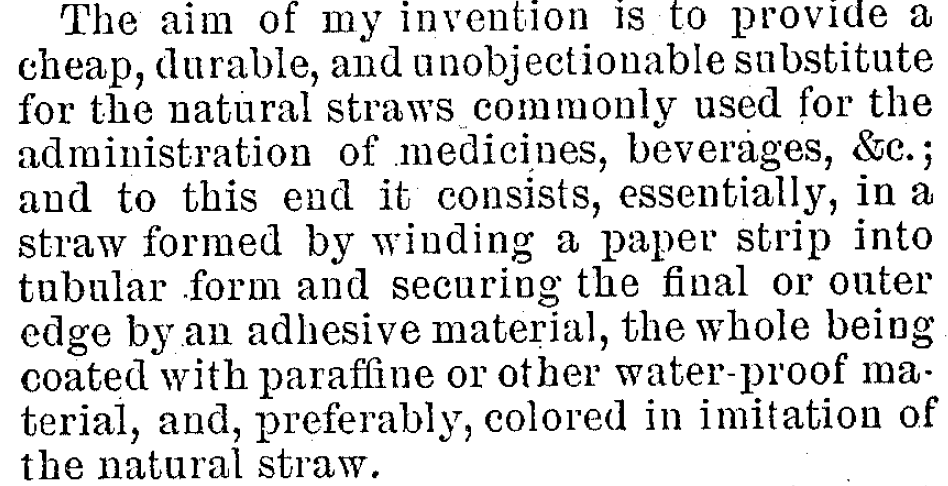
This straw was said (by Marvin) to be an improvement over the artificial straw patented (No. 9633) in England on July 8, 1887. Marvin explained:
Marvin’s straw was a paper strip formed by wrapping it around a spindle and dippling it in paraffin to make it water-proof. A few years later, Marvin got a patent (U.S. Patent No. 5277736 issued October 16,1994) on a Method of Coating Paper Tubes, and two patents (U.S. Patent Nos. 585057 and 585058, issued June 22, 1897), on alternate configurations of artificial straws.
Ironically, artificial straws were created to replace natural straws, such as rye grass straws, and now we are looking for more natural alternatives to the artificial straws.
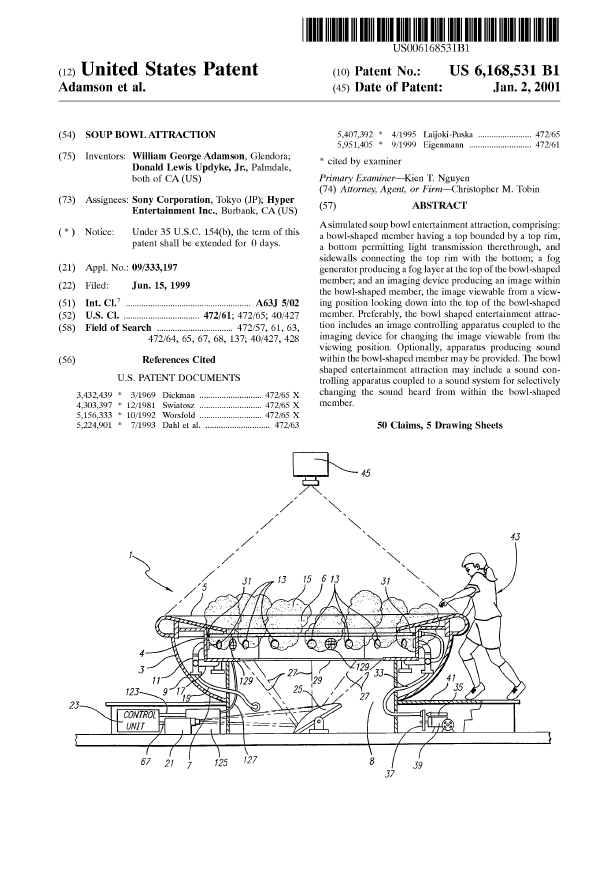
On January 2, 2001, U.S. Patent No. 6,168,531 issued to William Adamson and Donald Updyke, Jr. on a “Soup Bowl Attraction”:
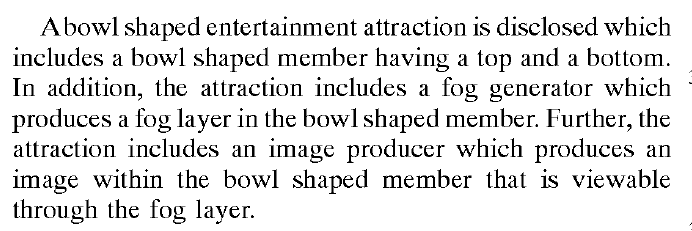
As explained by the patent, the invention is a giant bowl with fog generators to make it appear like a steaming bowl of soup:
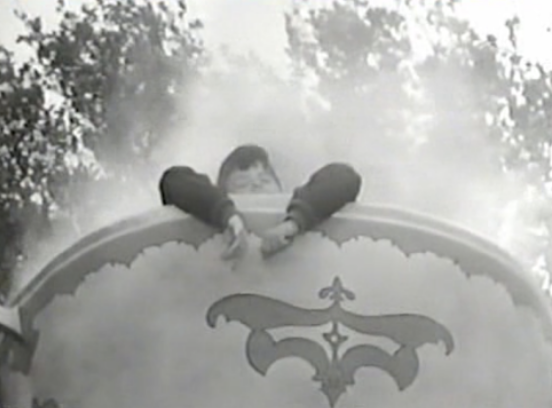
The Examiner was apparently not familiar with classic 1960’s television, because this “attraction” is strikingly similar to the soup bowl in which Beaver Cleaver got stuck in “In the Soup” (Season 4, Episode 32, of Leave it to Beaver (1961)):
The ‘531 patent was assigned to Sony Corporation and Hyper Entertainment Inc. One wonders what Sony had in mind for this technology.
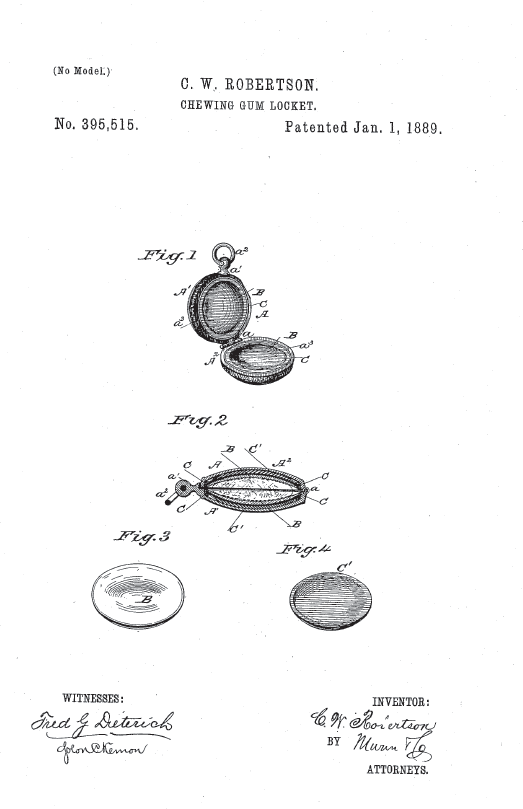
Just a few days ago we posted about patents on chewing gum, so it is appropriate to note that on January 1, 1889, U.S. Patent No. 395515 issued on a Chewing Gum Locket:
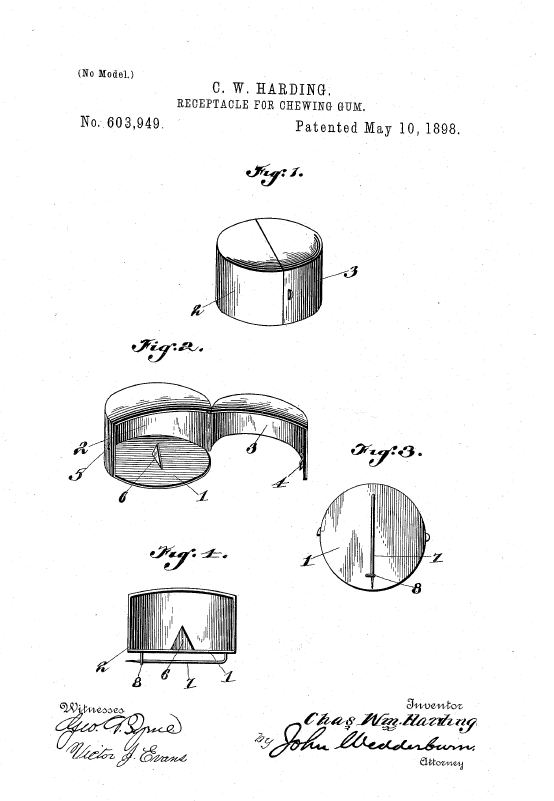
On May 10, 1898, U.S. Patent No. 603949 issued to Charles Harding on a Receptacle for Chewing Gum:
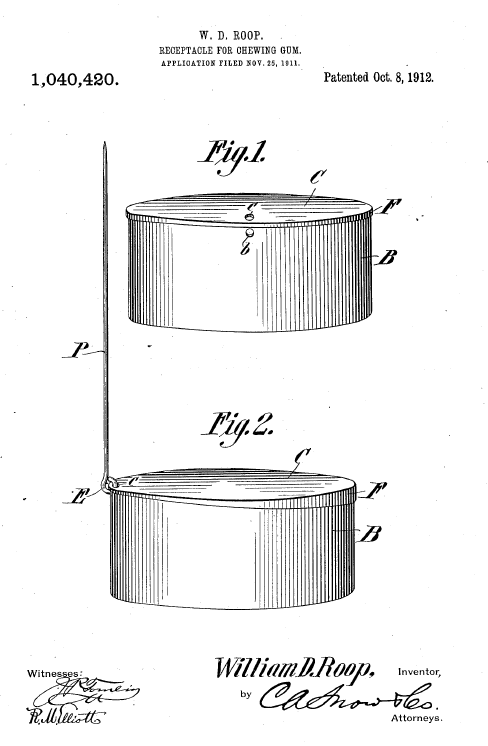
On October 8, 1912, U.S. Patent No. 1,040,420 issued to Willaim Roop on a Receptacle for Chewing Gum:
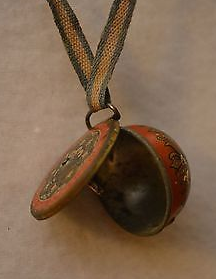
It is interesting that gum storing was actually a thing in the late 19th century, as evidenced by this gum-storing locket from 1898, and not just the subject of “paper” patents:
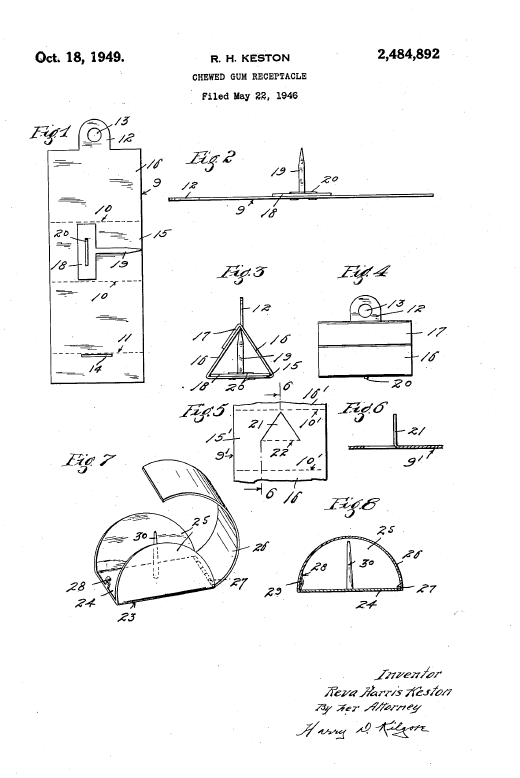
There was interest in saving used chewing gum well into the 20th century. U.s. Patent No. 2,484,892 issued to Reva Keston on October 18, 1949, on a Chewed Gum Receptacle:
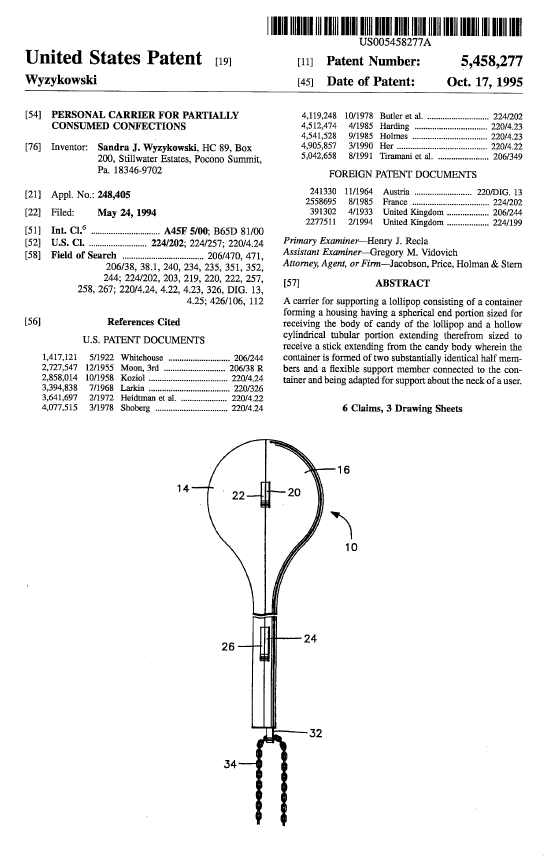
While the interest is saving chewed gum finally waned, on October 17, 1995, U.S. Patent No. 5,458,277 issued to Sandra Wyzykowski on a Personal Carrier for Partially Consumed Confections (lollipops):
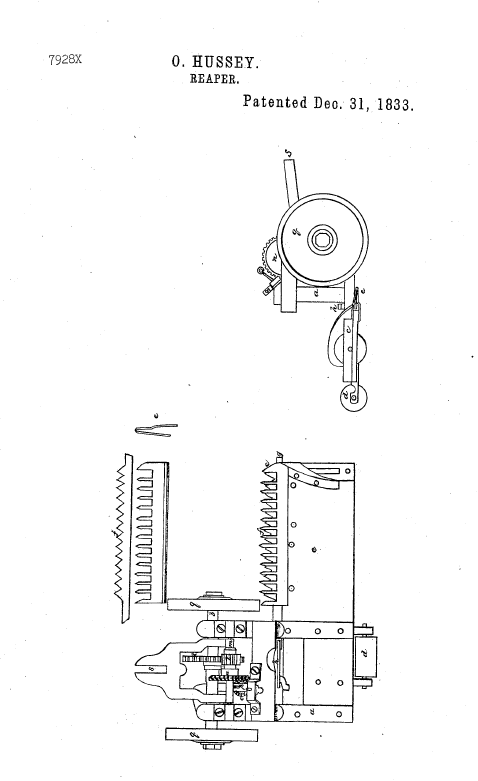
On December 31, 1833, Obed Hussey received U.S. Patent No. X7928
This was Hussey’s most notable invention was a reaping machine, but he also invented a steam plow, a machine for grinding out hooks and eyes, a mill for grinding corn and cobs, a husking machine, a machine for crushing sugar cane, a machine for making artificial ice, a candle-making machine, and other devices.
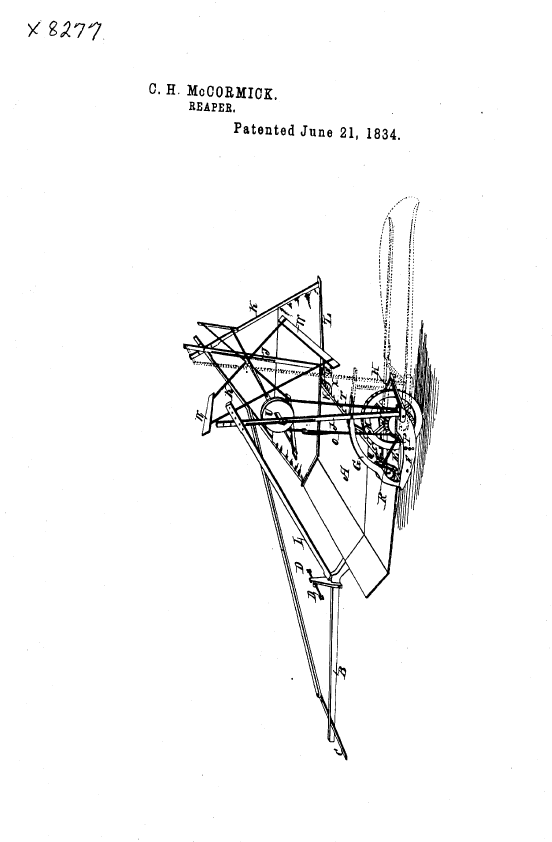
Although Hussey reaper was ultimately surpassed in the marketplace by the reaping machines of Cyrus McCormick, patented less than a year later on June 21, 1834 (U.S. Patent No. X8277):
Hussey was the first person to make, patent, and sell such a machine in the United States. His machine was first in that it was first to be patented and had been worked in at least eight states before McCormick’s machine ever left Virginia. Hussey’s cutting mechanism became the standard in harvesting machinery.
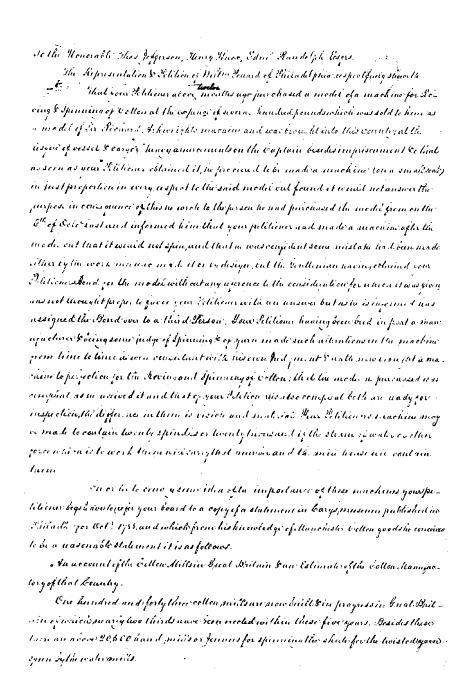
On December 30, 1781, U.S. Patent No. X36 issued to William Pollard of Philadelphia on spinning cotton by water power:
In his June 29, 1790, Petition to the Patent Board, Pollard explained that he purchased fa model of Sir Richard Arkwright’s “machine for Roving and Spinning of Cotton” that had been brought to the United States at great risk and potentially heavy penalty. Pollard built a small scale from the model but it didn’t work. Pollard altered his model, perfecting his own machine, and invited the board’s inspection, so that they can see the “visible and material” differences between them, his own being able to work from twenty to twenty thousand spindles if adequate force is supplied.
His petition was successful, as noted above, and shortly after the issuance of his patent, Pollard wrote to Thomas Jefferson on June 26,1792:
Sir:
Having brought the Machine for spinning Cotton to perfection, which your board was pleased to grant me a Patent for; and having erected a small Mill which will shew in some measure to what extent it may be carried, and its usefullness in such a Country as ours, I shall be very hapy if you, Sir, Mr. Randolph and General Knox will honor me with a visit, I think it will please you because it promises to be very usefull, if you can spare any hour this Week and be pleased to let me know I will write to or call on the other Gentlemen, any other Gentlemen I shall be glad to see; I think it probable that our worthy President wou’d be pleased to see it if you, Sir, wou’d be pleased to mention it to him, I am very respectfully Sir your most obedt. Servant
Wm. Pollard
Pollard’s mill was not a commercial success, so much so that it may have held back the cotton industry in Philadelphia for many years.
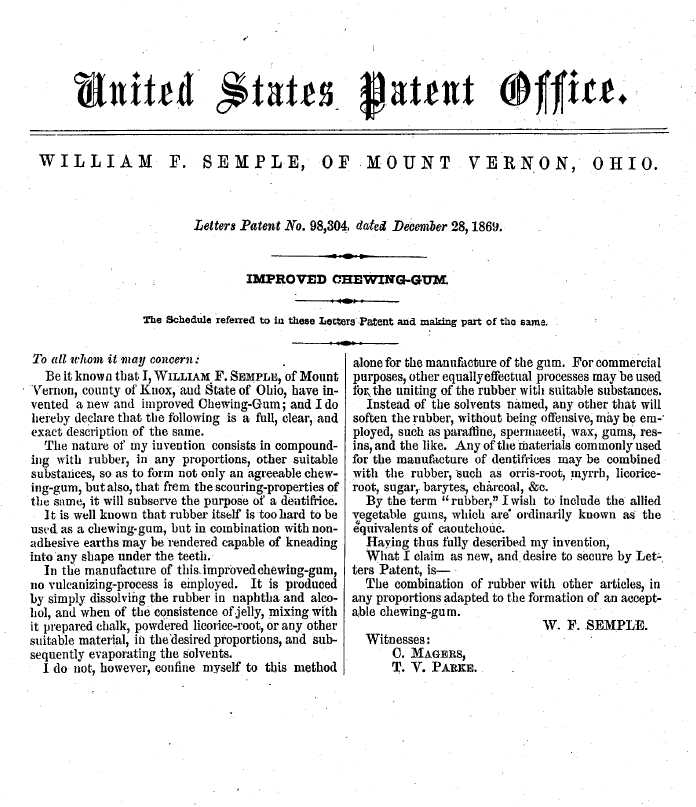
On December 28, 1869, U.S. Patent No. 98304 issued to William F. Semple on Improved Chewing Gum.
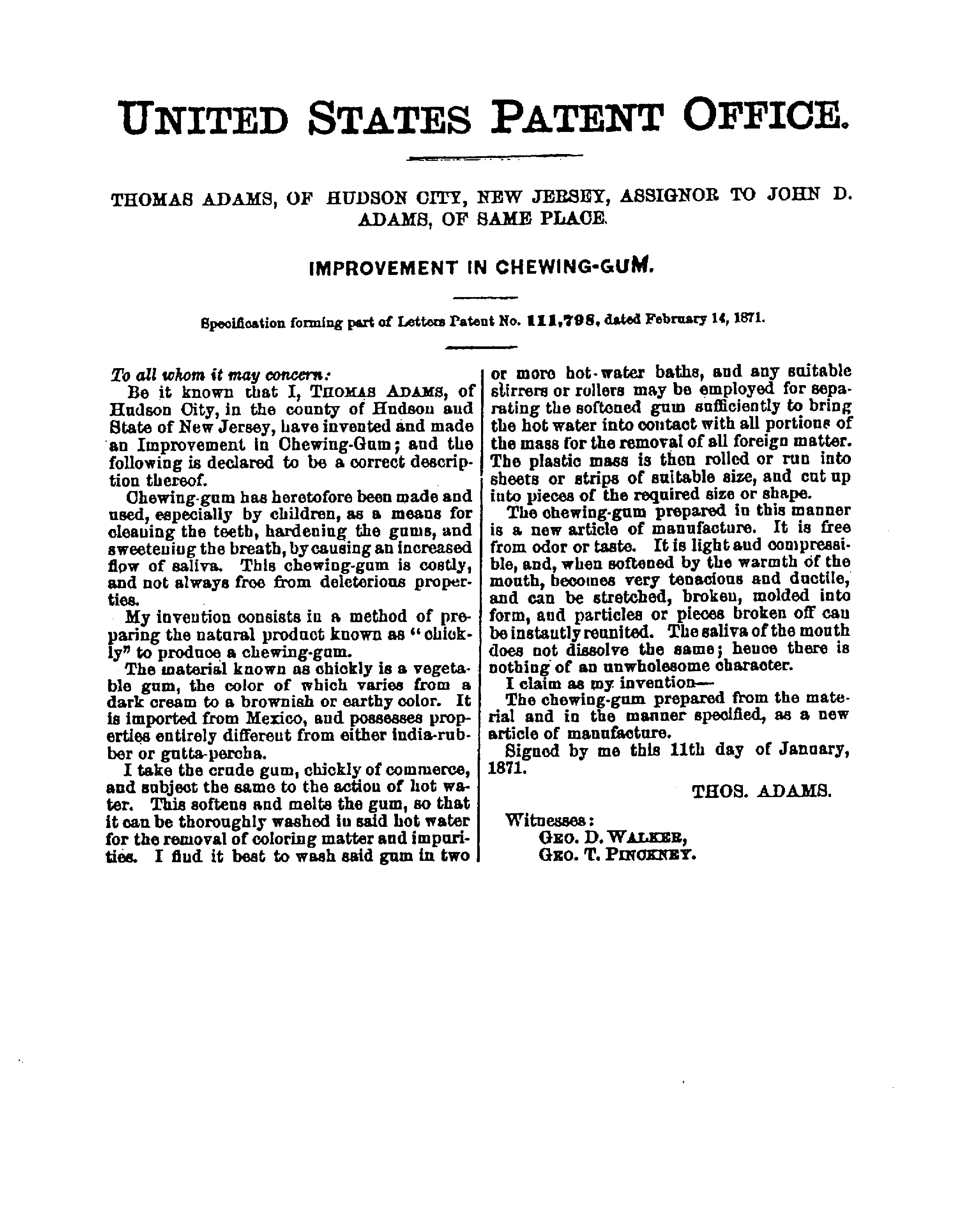
Semple’s Chewing Gum contained rubber that not only formed an agreeable chewing gum, but also served as a dentifrice. It was never commercialized. The first commercially successful Chewing Gum was patented by Thomas Adams on February 14, 1871 (U.S. Patent No. 111798):
Chickly (chickle) a natural vegetable gum collected from several species of Mesoamerican trees in the genus Manilkara, including M. zapota, M. chicle, M. staminodella, and M. bidentata. This was the basis of the first commercially successful chewing gum.
Thomas Adams (May 4, 1818 – February 7, 1905) was a 19th-century American scientist and inventor considered to be a founder of the chewing gum industry. Adams worked as a secretary to former Mexican leader Antonio López de Santa Anna, who chewed a natural gum called chicle. Adams first tried to formulate the gum into a rubber for making tires, and when that didn’t work, he turned the chicle into a chewing gum called New York Chewing Gum. His first product was a licorice flavored gum called Black Jack.